





Is your mattress causing allergies?
If you often wake up with
- a blocked or stuffy nose,
- itchy or sensitive skin, especially on your face or under your eyes, or
- congestion in the morning,
your mattress could be contributing to the problem. These are common signs of exposure to bedroom allergens such as dust mites, which tend to build up over time in older mattresses with reduced airflow.
iDustMite, a UK specialist in dust-mite-aware bedding, focuses on reducing exposure to these allergens by using the best dust mite mattress protector [3] to completely wrap and seal allergens in your brand new mattress.
This helps create a physical barrier between allergens and the sleeper, while still preserving breathability.
However, even the best mattress protector works most effectively when paired with a mattress that still offers good airflow and structural support.
Reviewing your mattress condition - and replacing it when it begins to sag, overheat, or lose breathability - is an important first step.
Why mattresses matter more than we realise
A mattress is used for around eight hours every night, yet many people keep the same one for far longer than they realise.
As mattresses age, materials begin to break down. Foams soften, springs lose tension, and internal airflow channels compress. This can reduce breathability and allow heat and moisture to build up, conditions that, as research suggests, dust mites prefer.
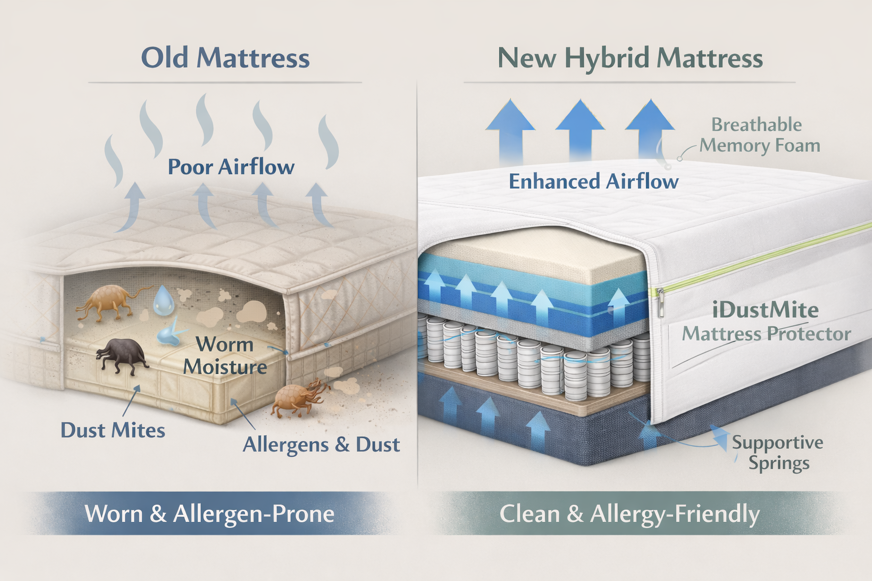
Older mattresses may also hold on to allergens such as dust mite particles, pollen, and everyday dust, which can irritate airways and skin during sleep.
Replacing a mattress semi-regularly isn’t just about comfort. It can also support a cleaner, healthier allergy-free sleep.
While there’s no fixed rule for everyone, many sleep experts suggest reviewing your mattress condition every 6 - 8 years, or sooner if it shows signs of sagging, overheating, or reduced comfort.
New mattresses still need protection
But, even a brand-new mattress begins collecting moisture and skin particles from the first night of use.
Using a full mattress protector or mattress encasement [4] helps protect the mattress surface, preserves airflow, and reduces the build-up of dust and moisture over time. Specialist bedding brands such as iDustMite recommend encasing a mattress as soon as possible after purchase to help maintain its condition long-term.
This approach works best when mattress replacement and mattress protection are treated as two parts of the same sleep setup.
A dust mite pillow and duvet protector [5] will further reduce dust allergens in your bed.
Creating a long-term allergy-friendly sleep setup
A cleaner sleep environment works best when several small steps come together:
- Invest in a high-quality, breathable mattress
- Replace mattresses when airflow and support decline
- Use a full mattress protector or encasement early
- Wash outer bedding weekly at 60°C
- Keep bedroom humidity below 50%
- Vacuum regularly using a HEPA-filtered vacuum
Also, check out this in-depth guide on how to get rid of dust mites in 6 easy steps [6].






Alternatively, message us directly via the Contact Us page.