




What do we mean by digital confusion?
Digital confusion is not the same as screen time and it's not just “being on your phone too much”.
It's the feeling of being unsure about what you're looking at, what it means, and what you should do next.
It often comes with thoughts like these:
- Am I missing something important?
- Did I click the wrong thing?
- Is this a scam?
- Will I lose money if I ignore this?
- Why is this so complicated?
This kind of uncertainty is mentally expensive and creates tension, even if the problem itself seems small.
Why digital confusion can affect sleep
Sleep needs a calm nervous system - your body has to move out of alert mode and into rest mode.
When you're stressed, worried, or on high alert, that shift takes longer, and digital confusion can keep you in alert mode for a few reasons.
1) Unfinished problems are hard to ignore
If you go to bed with an unresolved question, your brain keeps circling it.
This is especially true when the question involves risk. Money. Security. Health. Identity. Family.
A confusing email doesn't feel like just a task - it can feel like a threat you have not assessed yet.
2) Uncertainty creates mental noise
Even when you're tired, uncertainty can keep your thoughts active.
You may replay what happened. You may try to remember the exact wording. You may plan what to do tomorrow. You may worry about what happens if you do nothing.
That mental noise is the opposite of the quiet mind that sleep needs.
3) Digital stress often comes with a loss of confidence
Many people feel perfectly capable in daily life, then suddenly small when technology doesn't cooperate.
That emotional shift matters.
Feeling behind, rushed, or out of control is not relaxing. It can make you tense, and tension tends to follow you to bed.
4) The timing is usually terrible
Digital confusion rarely happens at a convenient time.
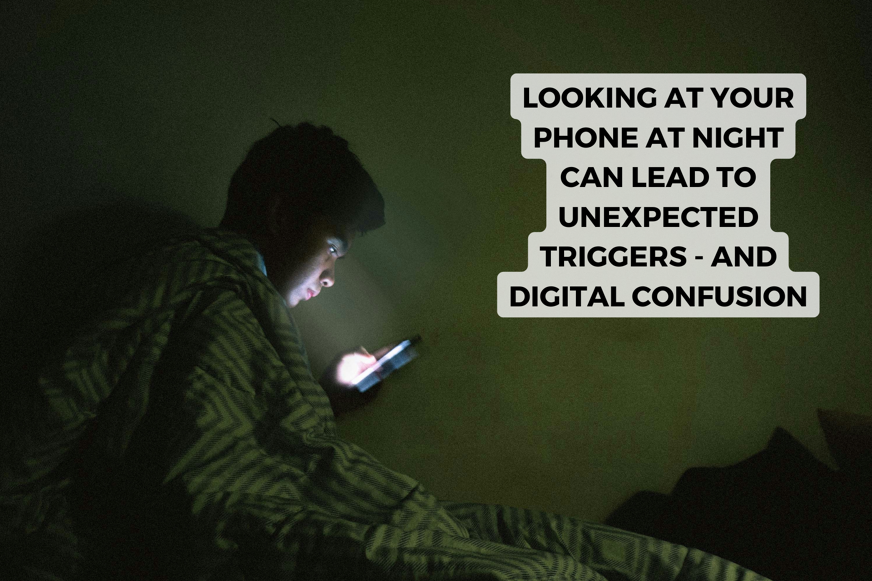
It often happens late, when you finally sit down. Or right before bed, when you remember something you need to do.
You pick up your phone just to check one thing, then you're pulled into a chain of confusing steps.
Now your brain is awake again.
Why digital confusion is more common later in life
Digital life is not designed for older adults.
Most apps and services assume people are fast, confident, and comfortable tapping through menus, settings, and pop-ups.
If you didn't grow up with today’s technology, modern systems can feel like they're moving faster than you're allowed to move.
That gap can create a specific kind of evening stress, and you might be left with questions like:
- What did I just agree to?
- Is this safe?
- Did I accidentally change something?
- Who can I ask without feeling embarrassed?
This is one reason why older adults can experience more mental load around simple digital tasks.
It's not about intelligence. It's about design, pace, and confidence.
The sleep cycle problem: Why “just leaving it” doesn't work
You might tell yourself: “I’ll deal with it tomorrow.” That's sensible advice, and sometimes it works.
But often, it doesn't, because the brain doesn't care that it's bedtime - it cares that something feels unresolved.
When unresolved issues are connected to safety, scams, money, or identity, your brain treats them like open loops.
- Open loops keep the mind active.
- Active minds struggle to fall asleep.
So the goal is not to solve every digital problem at night. The goal is to remove uncertainty.
Sometimes the best result is not a full solution. It's clarity.
A simple rule: Stop chasing solutions, chase clarity
If you only take one idea from this article, take this: Before bed, do not try to fix technology. Rather, try to reduce uncertainty.
That can look like:
- Confirming whether an email is suspicious
- Understanding what a message is asking you to do
- Learning what a pop-up means
- Getting a simple explanation of the next step
- Deciding safely to ignore something until morning
When you get clarity, the nervous system relaxes.
And when the nervous system relaxes, sleep comes easier.
Practical ways to reduce digital stress before bed
Here are a few simple habits that work well, especially if you often feel overwhelmed by online messages or confusing prompts.
1) Create a “digital cut off” window
Choose a time where you stop dealing with anything complicated online.
For many people, 60 to 90 minutes before bed works well.
During that window, you can still use your phone, but avoid tasks like:
- Banking
- Password resets
- Forms
- Online shopping
- Anything with warnings or urgency
- Anything that might trigger worry
This reduces the risk of ending your evening with an open loop.
2) Keep a “tomorrow list” by your bed
When something pops into your head at night, write it down.
Do not solve it. Just capture it.
This tells your brain: “It is safe. I will not forget.”
This is surprisingly effective for reducing mental spinning.
3) Use a calm explanation tool instead of searching
When people feel confused, they often do what younger users do: they search.
The problem is that search results can be noisy, contradictory, and stressful. You end up reading different opinions, ads, and scary headlines.
If you're already tired, this is the perfect recipe for more anxiety.
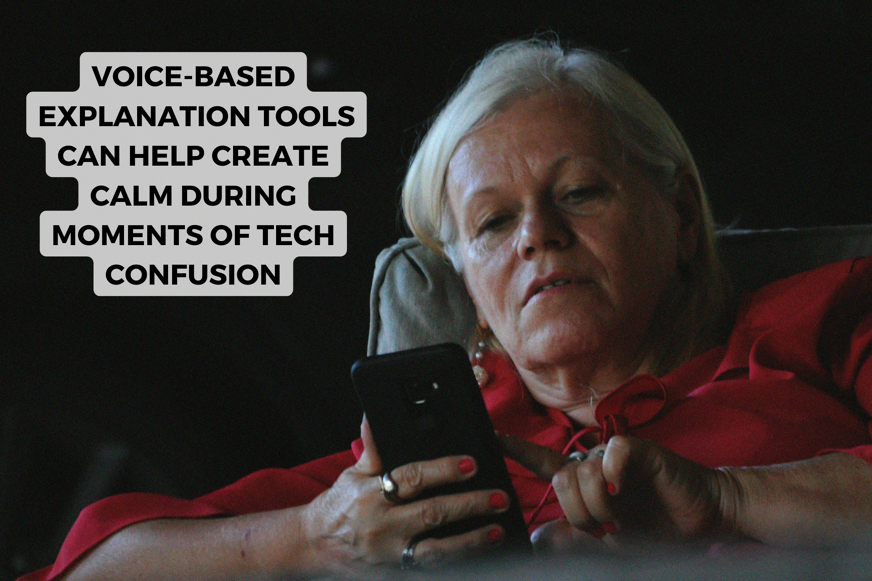
A calmer option would be to use a tool that explains things in plain language, without throwing ten tabs at you.
This is exactly where voice-based support can help.
For example, PeterAI [1] is built to answer everyday questions in a calm voice, and to help older adults make sense of confusing messages and digital prompts.
Instead of typing, clicking, and scanning results, you can say your question out loud, naturally.
If you're dealing with something suspicious, the goal is not panic. It is understanding what you are looking at and what a safe next step would be.
Used well, that kind of clarity can stop a worry spiral before it starts.
4) Avoid urgent decisions at night
This is a big one.
Scams often create urgency: “Act now.” “Your account will close.” “Final warning.”
At night, urgency feels even stronger, because you're tired and you want to resolve things quickly.
If you see something urgent late in the evening, treat it like a red flag.
A safe default is:
- Do not click
- Do not share details
- Do not call numbers in the message
- Take a screenshot
- Decide in the morning
Even if it is legitimate, most real services will still be there tomorrow.
5) Reduce the chance of confusion in the first place
A few simple changes can prevent late night issues:
- Turn off non-essential notifications
- Unsubscribe from spam newsletters
- Move banking apps off the first home screen
- Keep only a small set of “daily use” apps visible
- Ask someone you trust to help you clean up your phone layout
Less clutter means fewer accidental taps, fewer pop-ups, and fewer moments of panic.
A calmer evening routine for digital confidence
If you want a simple routine that supports better sleep, try this:
- Step 1 - Check messages earlier: If you know you often receive important messages, check them earlier in the day. Not at night.
- Step 2 - One small “admin block” in the late afternoon: Give yourself a fixed time to deal with digital tasks. Even 15 minutes helps. This reduces the chance that tasks follow you to bed.
- Step 3 - Evening becomes “low stakes only”: In the evening, your phone is allowed for comfort, not complexity. Music, podcasts, photos, meditations, simple messages. Nothing that risks opening a stressful loop.
- Step 4 - If confusion hits, aim for clarity: If something does appear late, do not deep dive. Get a simple explanation, decide whether it is safe to ignore, and move on.
These steps will help you get better sleep more easily.
What to do if you are a caregiver reading this
If you support a parent, grandparent, or older relative, digital confusion can quietly affect their sleep and wellbeing.
You may notice:
- They stay up late trying to fix something
- They worry about emails and pop-ups
- They feel embarrassed asking for help
- They avoid tech during the day, then panic at night
You can help by doing two things.
- First, reduce urgency. Let them know it is always okay to wait until morning.
- Second, give them a calm support option. That might be you. It might be a scheduled check-in. Or it might be a voice-based assistant [2] that can explain things simply, without judgement.
The point is not to make them more tech-savvy. The point is to remove stress.
And better sleep often follows.
Final thoughts
Digital confusion is not just annoying.
For many people, it's a hidden source of stress that shows up most strongly at night.
If your mind feels busy in bed, it may not be because you had a dramatic day. It may be because you went to sleep with uncertainty.
The good news is that you don't need a perfect digital life to sleep well.
You just need fewer open loops, less urgency, and a calmer way to get clarity when something feels confusing.
Small changes make a real difference.
Table of Contents
What do we mean by digital confusion?
Why digital confusion can affect sleep
Why digital confusion is more common later in life
The sleep cycle problem: Why “just leaving it” doesn't work
A simple rule: Stop chasing solutions, chase clarity
Practical ways to reduce digital stress before bed
A calmer evening routine for digital confidence
Frequently asked questions
-
References






Alternatively, message us directly via the Contact Us page.